
The musician donates £25,000 cash award to grassroots live spaces

The artist has given the complete sum of his £25,000 honor prize money to the trust for venues, which works to protect the Britain's independent concert spaces.
Fender was presented with the award on 16 October as his third album his work was declared the best record of the past year.
He has opted to hand the money over to the MVT, in acknowledgment of the essential function small stages played in his early career.
"I personally couldn't be pursuing what I am doing today if it wasn't for all the gigs I played around the area, and beyond, when I was just getting going," said the artist. "These locations are iconic, but they are struggling."
From early 2023 onward, more than 150 of these locations have permanently closed – about one-sixth of the whole industry in the UK.
Over the past year, major artists like Pulp, Coldplay, Katy Perry and Sheeran have all backed the trust in its attempts to support the industry, by applying a small levy to their admission fees, which benefits independent venues.
Sam Fender also joined in, generating in excess of £100,000 on his live tour to assist thirty-eight local spots across England, Scotland, and Wales.
The money helped locations that were dealing with possible closure due to difficulties arising from flooding, fire incidents and bereavements, as well as permit problems, legal disputes and noise complaints.
Some locations received financial assistance in modernizing facilities and technical equipment that directly benefitted artists and fans.
"The idea that revenue from shows in big venues supports the independent spots, where it begins for musicians like me, is just common sense," the star has stated.
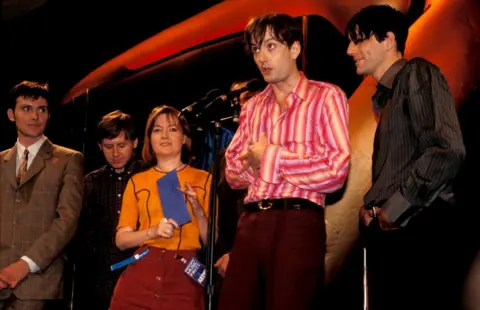
The musician is not the first artist to donate his Mercury Prize winnings to good deeds.
In Pulp won the award in the mid-90s for their release their work, vocalist Cocker announced that the act would donate their winnings to the non-profit War Child.
That year, rapper and singer the artist divided her prize across a few charities, such as the NSPCC and a Sickle Cell organization.
"I also gave a grand to my local community centre, to their classes, because I trained in gymnastics when I was younger and they needed new equipment," the artist explained to the media.
In recent years, they donated their funds to the local youth club that developed their band, as well as other independent music bodies.
Additionally 1994 winners they gave their award to a MS organization after a acquaintance was identified with the disease.
"Receiving the award was sufficient," remarked vocalist Small. "The money was the cherry on top but we could do without the cherry, because we had the cake. So our success impacted the lives of others."
In the past week, the trust announced it had saved a couple of grassroots venues in south-east England, by transferring them to community ownership.
The first in Southampton and the other in the city were purchased under the community ownership program, which is funded by Arts Council England and supporters who purchase "shares" in the properties.